If the light that is in thee be darkness
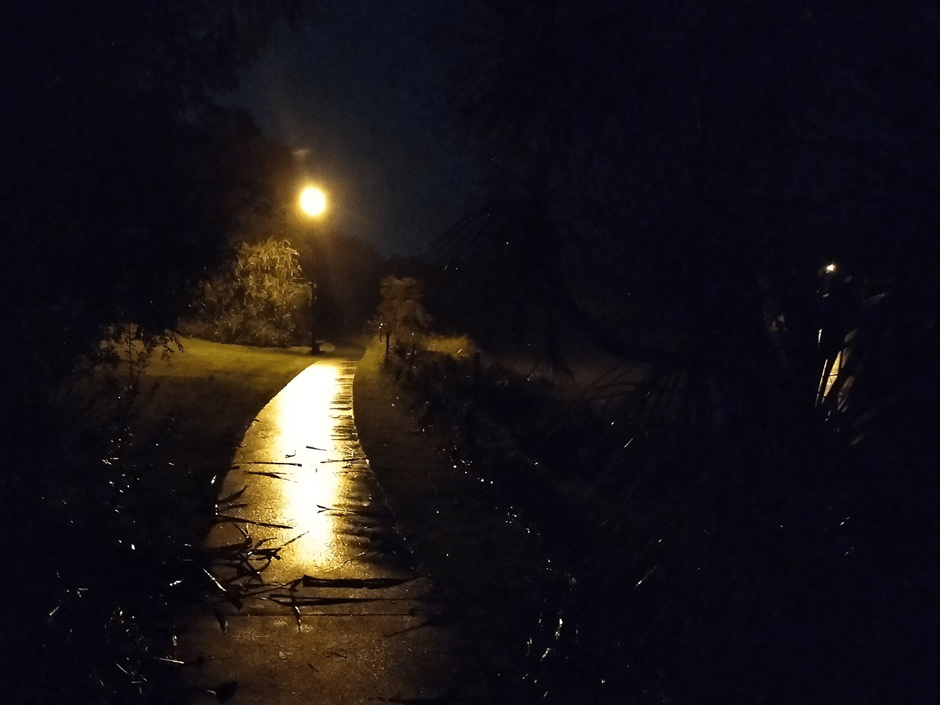
Following last week’s article in which I explored the origins and meaning of ‘light’ and ‘darkness’ in our lives, this week I want to look at one way in which darkness can persist in our understanding, which I believe the Bible shows us. And just as I said last week I was attempting to ‘shed some light’ on this subject, so this week also I find I can hardly begin to write about it without encountering the connection between physical, intellectual and spiritual sight in everyday language.
To ‘look at the subject’ does not mean simply to use one’s eyes, though if you are reading this, sight is necessary. But equally if you were listening to someone else read – or if you were blind, and reading braille with your fingers – you could still be ‘looking into something’. This connection is important because I think it is reflected (there again!) in the way Jesus spoke of these things – light, darkness, and sight.
‘The light of the body is the eye: if therefore thine eye be single, thy whole body shall be full of light. But if thine eye be evil, thy whole body shall be full of darkness. If therefore the light that is in thee be darkness, how great is that darkness!’ (Matthew 6:22-23)
There is quite a bit to think about just to make simple sense of the above scripture; for example, the light of the body is the eye? When I think about it, that makes perfect sense. My body has no other way to receive light so as to enable sight, except by my eyes. It’s just not how I would normally put it.
And, ‘if thine eye be single’ or, ‘if thine eye be evil’ – these are not states I would normally attribute to human sight, whether good or bad. But we do speak of ‘double vision’, which is a confused way of seeing, and not thought of as good eyesight. So from that perspective, ‘single vision’ presumably is good, and perhaps could be thought of as a way of seeing which is clear, definite and unambiguous.
It is perhaps no coincidence that Jesus says in the very next verse:
‘No man can serve two masters: for either he will hate the one, and love the other; or else he will hold to the one, and despise the other. Ye cannot serve God and mammon.’ (Matthew 6:24)
Now I am not going to suggest the verses above about light and darkness are all about God and money, but this is an example of a divided perspective or motivation – not ‘singular’. And I think, personally, what Jesus is speaking about as ‘thine eye’ is mainly our ‘perspective’ – our view of things, our attitude and our world view – the frameworks of understanding by which we interpret the information that comes to us.
If I were to ask, ‘how do you see this?’, I would not normally be asking by what means it is possible to physically see some object. I would be asking, what is your perspective on the subject? Similarly, ‘what is your view on this?’ means, what do you think of it?
Our perspective is how we see things. Every piece of knowledge that comes to us must pass through it, and may appear accurately to us, or be clarified, or distorted, or even made incomprehensible so that we fail to understand the information at all. Our perspective may be shaped by beliefs, ideology or religion which set rules about how we should see things. Our perspective is also shaped in less obvious ways, such as through our experience and what we make of it.
So for example, if a person, tragically, has been abused through a church, they might not immediately receive an invitation to attend church as something meant for their good. They might even view the person inviting them as a potential abuser, even if that person meant nothing towards them but good. In which case, if the invitation was meant only for their good, the person’s perspective who receives the invitation would be distorted from reality. Damage done to them has ‘darkened’ their outlook, so that what was meant for their good now only causes harm, being misinterpreted, and reviving and entrenching the wounds of abuse.
The above is perhaps a poor example, but I think this is the type of thing Jesus meant when he said, ‘how great is that darkness!’
When someone is offended by other’s efforts to help and to serve them, even to love them – there is little at that point which can be done for them. But for the grace of God, that is what an ‘evil perspective’ can do to us. It can turn the light which enters our lives into darkness, by our misinterpreting it according to our ‘evil’ perspective.
Similarly, if someone is offended when we speak to them of Jesus, who alone can save – that person’s light – their perspective – is darkness, which blocks their view of the true Light.
Such perspectives can be very general and block people’s knowledge of God altogether, who ultimately is all our light and the provider of every good that we need and untold more besides. For example, seemingly good men I have known, including persons of my own family, have said to me, If there is a God, then given what we see in the world, he must be an ‘abomination’. This type of bias is not arrived at by chance, nor by an honest enquiry into the state of the world, but by bitterness, grievance and an ‘evil eye’. And that is not to lay the blame with those who have such a perspective, for God alone knows where and with whom such darkness originates. And to see with any light at all is the gift of God; we can only give thanks if indeed we see what others have not.
And just as some can hold a dark view of things, equally by faith we can receive light through even the most unhappy and testing circumstances – for example, Abraham, who when God told him to sacrifice his son Isaac, believed still in the goodness of God, and that God must have some good reason, and that God would even raise Isaac from the dead, so that he might be Abraham’s heir as God had promised. And God indeed spared him. (Hebrews 11:17)
Or the Canaanite woman who begged Jesus to heal her daughter who was ‘grievously vexed with a devil’, to whom Jesus said:
‘It is not meet to take the children’s bread, and to cast it to dogs.’ (Matthew 15:26)
This woman could hardly have had a stronger reason to think that Jesus was callous and uncaring. Instead she saw Jesus as longing above all to help her, and to heal her daughter despite everything, and she said, ‘Truth, Lord: yet the dogs eat of the crumbs which fall from their masters’ table.’ (Matthew 15:27)
‘Then Jesus answered and said unto her, O woman, great is thy faith: be it unto thee even as thou wilt. And her daughter was made whole from that very hour.’ (Matthew 15:28)
That is an eye which is ‘single’ – a single-minded conviction of the goodness, power and love of God which no evidence seeming to the contrary can change. And what the Canaanite woman saw with her eyes of faith was true; it was no illusion. Jesus did love her, and desire to help her and to heal her daughter.
An example which may not seem notable, but which I find touching and revealing of an attitude filled with light, are Jesus’ words as follows:
‘Behold the fowls of the air: for they sow not, neither do they reap, nor gather into barns; yet your heavenly Father feedeth them. Are ye not much better than they?’ (Matthew 6:26)
But while the above verses were meant to show God’s care for Jesus’ disciples, including for us, I also find it revealing that Jesus saw the Father’s care for creation in this light. For could he not equally have said, In a cold winter, or in a poor season for grain, the birds perish? And where is their Creator then?
Let alone that men themselves might suffer a similar fate in a famine.
Rather, Jesus saw a kind, loving and powerful Father, who ‘opens his hand and satisfies the desire of every living thing’ (Psalm 145:16). It was unthinkable to Jesus that the Father he knew, the Giver of life and Provider of every good thing, could also be the author of suffering, lack, or death. These, Jesus saw, must have some other source, and while God allows them for a season (and for greater good) it cannot be for long. Jesus’ vision of the Father was undimmed, even by the knowledge of his own suffering to come. Light passed perfectly without distortion or restriction into the one who is the Light of the world. Jesus saw with true eyes of faith.
Let us also see clearly the one who is our Light: Jesus who is love, and is without fault, perfect in goodness, kindness, and truth. And in truth, scripture, and all things bear witness to him if we see truly ourselves, with eyes of faith.
May the eyes of our understanding be enlightened, and the shadows flee, so that we see him as he is, now and evermore, amen.
 wilderness99